
Last Conversation With Son is Deep, Loving
November 19, 2008 by
Filed under Death of a Child, Featured Articles
By Yvonne E. Lancaster –
Coming home was a tough time of day.
It signaled the end of the occupational work day, and the beginning of the personal work evening…preparing dinner, doing laundry, taxiing kids, whatever else kept me going until 11 p.m.
My 5 p.m. homecoming blues had often been softened by seeing my oldest son Brian’s familiar dark blue Chevy Citation sitting in the driveway.
His bumper stickers read: “Free the Beaches” and “Save the Whales.” My heart was always warmed to know I’d raised a son who was a caring person.
As I deftly balanced grocery bags, a trick I’ve learned over the years, Brian sat snacking at the kitchen table with the newspaper opened to the comic strip section.
“Hey Mom, what’s up?”
“Not much, Sonny Boy,” I replied, ruffling his thick blond hair that had made people downright jealous for the last 19 years.
Brian helped put the groceries away, checking out all of the goodies.
“How’s school going?” I asked.
“Alright. We’re getting psyched-up for exams. Ugh!” He held up a jar of pickles.
“How come you’re still buying so much food?” he said. “You’re forgetting I’m away at school.”
“No, Sonny, I’m remembering that you pop in two or three times a week with your friends. Actually, our grocery bill has inflated. You’ve forgotten you have a teenage sister and brother who are human eating machines.”
“Yes, that’s true,” he said, reconsidering.
“How are they, Mom?” he asked.
“They miss you, and I do too.”
“I miss all of you, too,” he said slowly. “But, after I graduate from the Mount, there’s a possibility I can come home before I go to Southeastern.”
“That would be great, Brian. It’s not the same without you. It’s an adjustment period for all of us with you away,” I said, my voice trailing off.
“Is everything really alright with you?” I asked.
“Well,” he hesitated before beginning again. “Between studies, the job and girls, I’m not sure which is worse,” chin in hand, his elbow resting on the table.
“Remember that personal and educational plan we worked out for you?” I said. “Well, maybe you should review it,” I said, looking at him from the corner of my eye, trying not to sound like a mother.
“It’s tough out there,” he said.
“Yeh, I know it. Life truly tests the soul,” I said.
Darkness began to fill the kitchen the kitchen. I switched on the light and decided to have some tea.
“Gotta run, Mom.” Brian gathered his books, his jacket and an apple.
“Why so soon?” I asked.
“I promised to give a friend a lift. Her car has been in the shop.”
“Oh,” I said, trying not to show too much disappointment.

“How about dinner and conversation on Saturday?” he asked.
“Sounds good, Sonny. My treat.”
We hugged and kissed goodbye.
As my head left his broad shoulder, I couldn’t help feeling the years that the years had gone by too quickly. How could he have become a man so fast? Wasn’t it just yesterday that he laid his head against my shoulder?
As I watched him leave, I kept the door open, letting the December coldness inside. My old mother’s heart ached for simpler times; my new mother’s heart felt pride and joy in seeing him become an independent young man.
“Thanks, Mom. I love you.”
“Thanks, Brian. I love you, too. Always know we are here.”
He smiled with renewed confidence and waved. His boyish grin found a place deep within my heart.
The next time I saw Brian was five days later. He was in a coma and died, after a tragic car accident caused by a drunk driver.
It’s OK to Laugh… and Other Hints for the Holidays
November 18, 2008 by Neil Chethik
Filed under Death of a Child, Featured Articles, Grief and the Holidays
By Tom Zuba –
My 18-month-old daughter Erin died suddenly on July 18, 1990. Had she lived, we’d be preparing for her 20th birthday this January 2. Even though I had grown up aware that children do die - my own baby brother Danny died when I was just 6 years old - nothing prepared me for my daughter’s death.
I was ill-equipped and ill-prepared as were most, if not all, of the people in my circle. That first holiday season, and the next, and even the next were difficult for my wife and me. I wish someone had handed us the following information. It might have made the journey a little easier. That is my wish for you.
1. Remind yourself that you will survive. You will.
2. Think about what will bring you the most peace.
* Keeping all traditions in tact?
* Tweaking some traditions a bit and adding new ones?
* Throwing out all the old traditions and starting new ones?
* Flying to Florida and completely skipping the holidays this year? It’s okay to do that.
3. Don’t expect anyone to mention your deceased loved one by name. Believe it or not, that’s your job. People will look to you to determine whether or not it’s safe to talk about the deceased. A few subtle ways to do that:
* Serve/bring your deceased loved one’s favorite holiday dish - talk about it!
* Bring a favorite picture - pass it around. Work it into the dining table centerpiece.
* Bring a favorite memento - a book, a poem, a watch, a piece of jewelry - share it after dinner.
* Have your loved one’s favorite music playing in the background - tell the story.
4. Plan a special evening for close family and friends when you REMEMBER. Ask everyone to bring a favorite photo and write down a special memory. Set time aside to sit in a circle and share the photos and stories.
5. Remember that it’s okay - it’s even healthy - to cry.
6. It’s okay to stay in bed…you will get out, when you are ready and able.
7. It’s okay to smile or even laugh, a bit. You’re not being disloyal.
8. Buy yourself a gift. Wrap it. Write a note - to you - from the deceased.
9. Be gentle. Most of all be gentle with yourself. You are doing the best you can.
10. Light a candle. Hope.
Tom Zuba can be reached at tom@tomzuba.com or through his website: www.tomzuba.com
Gratitude Journal Brings Grieving Mother Relief
November 13, 2008 by Neil Chethik
Filed under Death of a Child, Featured Articles
By Debra Reagan –
There came a point in my grief over the death of my son Clint when I became so tired of being tired. I began to search for something that would offer a bit of relief. I purchased a small notebook and began keeping a daily gratitude journal. Every day, I tried to find something to write in my journal.
Most days, at first, I was just grateful that I had made it through another day. As time went on, I began to find small things of which I was truly grateful. I began to see that I had received many blessings. These were blessings that I would happily give back if I could turn back the clock, but they were blessings nonetheless.
It seemed that as my journal grew, so did my strength. I began to look forward to logging my gratitude in my journal. I suppose my focus was changing and my pain over the loss was being replaced with my appreciation of those around me. This felt right for me.
At one point, I expanded my journal by adding a section where I could record events that had brought me brief moments of happiness. I wanted to determine if there was a pattern to these moments. I longed so much to be happy again. My dear Clint wanted everyone to be happy.
It has been awhile since I began my journal and I continue to take one day at a time as I search to find what is right for me. I accept that my new normal will always have a level of the pain because of our great loss; I want to find ways to carry this loss. I want Clint’s life to also have a legacy of love, joy and happiness. The tears still come, but sometimes now smiles come too. Those smiles represent the love and precious memories.
My husband once asked me if I would do it all again. I knew what he meant. He was asking me if I would marry him again and have our two beautiful sons if I knew this would be the outcome. In the depth of the pain, I must admit I paused and wondered what person would ever choose to go through this anguish? But then the answer came: If avoiding the pain meant avoiding the love, then I would choose the love with all the strings attached. I am grateful for this love.
I am grateful for the past and the time we shared as a family. I am grateful for many things in the present: my family and friends, the special connection I still have with Clint. I am grateful for my faith and the future, because I believe I will see Clint again.
Reach Debra Reagan through her website, www.clint-reagan.memory-of.com
Stillbirth: ‘We Knew You Before You Were Born’
November 10, 2008 by
Filed under Death of a Child, Featured Articles
By Judith O’Reilly –I love my children. All four of them: there is one I cannot hold. Not true. I hold him in my heart. I just cannot hold his hand in mine. He would be eight today.
Two days before he was due to be born, he stopped moving. I did the things you do, ate vanilla ice cream for which I had no appetite, climbed awkwardly into a hot bath, dribbled water onto my still belly, fell silent, thought: “Fuck and buggery.”
My husband drove me to hospital. I spoke. “I’m sure it’s fine, but I can’t feel the baby move.” The midwife took me in, laid me down, wired me up, turned off the light. She cold-gelled and swept the veined mound with ultrasound. I thought: “Now’s the time to wave, baby.” No wave. She could not find a pulsing beat in the grainy black and white. I thought: “I shan’t ask for a picture then this time.” She said: “I’m going to get someone else to have a look.” I thought: “That’s not what you’d call a good sign,” as the door shush closed behind her.
A brief pause before an older woman came in. Kind. Experienced with bad news. Sweep and look again to find death, tragedy, horror, and desolation. She leant in towards me, said her prayers for the dead: “I am very sorry to have to tell you . . . ” My husband and I clung together as if our world had ended. Our world had ended. I can tell you the exact sound a heart makes when it breaks. It sounds like a wolf. Both of us heard it.
If you have a stillbirth, they do not cut you up, rip out the babe, sew you up, and send you away, almost whole again. Lick split. Instead, they say, “Don’t swallow this,” and hand you a torpedo; connect you to a drip and “start you off.” They say: “This isn’t going to hurt,” and lie. “We’ll break your waters,” and take up a crochet hook but not to make a table mat. “Let’s give you morphine. Usually, we don’t do this.” The morphine helps but not enough. “Not long now” and “Push” and “Stop” and sixty hours later: “Well done,” and you see how your life could have been.

My baby boy was beautiful. These babies often are. My baby boy was dead. Stillbirth can be like that. Lying on a paper blanket, the bones in his skull all pushed around, misshapen. The dead, they do decay. Yet, when I felt his head push out from me, he had felt wet, warm, and wonderful. Don’t look now. The skin, already flayed from his neck, came off at a too tender touch. I do not know the colour of his eyes but his fingers, tips tinted in scarlet, folded to hold my finger. The first and last time I held his hand in mine.
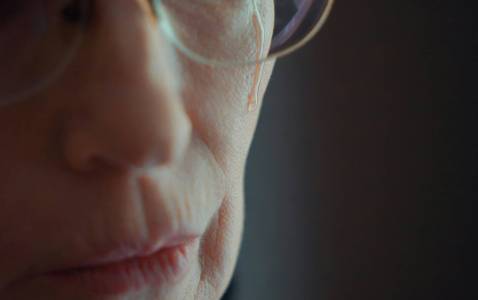
My hand splayed on his chest, his, left hand curled round my little finger; my thumb tucked in the other. I felt along the romper for his feet, the curve of his calf, the better to remember his body. We had time with him, but not enough; I kissed his rosebud mouth, but not enough; I showered him in tears, too many.
I know how death smells. We lit candles in tins. One for vitality. It did not work. We took endless photos of a subject who never moved. As my husband slept for an hour through the London night, I sat with my baby, told him about Christmas and birthdays and jungle animals and Northumberland which his father loved and where we holidayed each New Year. I swear he heard me. Then the smell got too much and we buried him. I have the bill yet. Keepsakes are hard to come by when a baby dies.

Supply of a small white coffin and transport:
• Fee: £150
• Extra mileage: £80
• Gravediggers: £60
They were toothless. The gravediggers, standing too close and anxious to get on with the job, leaning on their spades as we buried our future. In his coffin we put a teddy bear (cruel of us to bury a teddy), photo of a kiss, crucifix (I have its mate), tulip, and a letter. Hardly room in there for the baby. We printed the letter on the order of service for the funeral. It said: “We knew you before you were born and we wouldn’t have missed a moment of our time together as a family. Wherever we go in life, you will be with us and part of us. You will always be the little blond-haired boy running alongside us on a Northumberland beach and the sound of your laughter will always fill our home. ”
No reason for the death. As the hospital report said: “No malformations or obvious infection.” Often the way. His heart weighed 19g. Not a heavy heart. Mine weighed more. No medic in rubbered hands can weigh a mother’s love though. The fact my husband touches me reminds me not to die and he pulls me through the anguish of the days and nights and days. And we whisper a promise to each other that we will not compromise; we will think differently; do what it takes to strive for happiness together.
From the book Wife in the North by Judith O’Reilly. Reprinted by arrangement with PublicAffairs (www.publicaffairsbooks.com), a member of the Perseus Books Group. Copyright © 2008.
Judith O’Reilly was the education correspondent for The Sunday Times of London, where she also reported on politics and news, and worked undercover on education, social, and criminal justice investigations. She is a former political producer for ITV’s Channel 4 News and BBC2’s Newsnight. A freelance journalist, she started her blog, www.wifeinthenorth.com in 2006. She lives in England.
Do We Ever ‘Get Over’ the Death of a Child?
November 4, 2008 by
Filed under Death of a Child, Featured Articles
By Anne Dionne —
There was a time when I believed that people should “get over” their grief by the 12th month following a loss. After all, isn’t that what our society believes to be true?
In the summer of 1976, I was employed by a doctor in a medical office building. There were several other offices on our floor, and at noon time, I would meet with some of the other doctors’ employees for lunch. One woman, whom we called Gracie, had lost her 16-year-old son two years prior in a drowning accident. Each day at lunch break, Gracie would speak about Lloyd almost as if he hadn’t died. She would tell us stories about him and share her favorite memories.
Quite frankly, the rest of us thought she was a little over the top and we grew tired of hearing the stories. One day, she shared that she had not touched his bedroom since he had died two years before-the bed wasn’t made, and his clothing lay in the same place as he had left them on the day that he died.
Well, let me tell you that we were all flabbergasted, to say the least! “Isn’t this pathetic?” we lamented. We were certain that Gracie would be ready to be locked up in a mental institution if she didn’t receive immediate psychological attention.
Fast forward to May of 2001. I was the mother of a 19-year-old son who had lost his life in an automobile accident two days prior. As I prepared for his funeral, I couldn’t get Gracie off my mind. I hadn’t thought about her since I left my old job in 1976. I wanted to look her up and offer an apology. “Now,” I thought, “I get it.”
Here I am now, seven years after my son died. How long will it take for me to “get over it?” Well, I’m amazed that I am still here-that I didn’t die when my son died. Only someone who has experienced a devastating loss can truly understand what that means.
Yes, I have joy in my life again. Yes, my life and relationships are stable and I function normally again. I’ve come a long way since the days of lying on the cemetery grass near my son’s gravesite in tears while talking and singing to him. Yes, I hope that I am graced with a long and healthy life. Am I over it? The clear answer is, “No.”
I will never be over it, nor would I want to be over it. I keep my son’s memory alive in my heart and soul. I believe that his body died, but his spirit lives on, and that gives me peace and purpose for living. His picture is still on my bedroom wall, and I occasionally wear his sweats. And if I ever find Gracie, we will have a real heart-to-heart talk over a nice warm cup of tea.
Parent of Organ Donor Treated Like Royalty
October 30, 2008 by Reg Green
Filed under Death of a Child, Featured Articles
By Reg Green –
Recently, in the restaurant of a Northern Italian hotel, someone in our group told the waiter I was the father of a seven-year-old California boy who was shot in a bungled robbery while we were on vacation in Italy in 1994. From a nearby table, a voice said “Ah, Nicholas.” Tables around the room took up the theme until it became a topic of general conversation.
It speaks volumes that a boy, and a foreigner at that, who was killed fourteen years ago can still bring a roomful of strangers together. It’s true the circumstances were unusual. My wife and I donated his organs and corneas to seven Italians, all of whom are still living. Even so, the intensity of the emotion after all this time always surprises me.
Last week, in the latest in a series of demonstrations of sympathy that have been held in cities from the Alps to Sicily, the little town of Giussano (pop 25,000), near Milan, was caught up in a flurry of events in Nicholas’ memory, organized by the local branch of AIDO, the dedicated volunteer group that promotes organ donation throughout Italy.
Giussano has no connection to our family: none of us ever visited it before Nicholas was killed. But a thousand people attended mass in the principal church at which the priest repeatedly linked organ donation to Christ’s teachings on helping others; 350 townspeople attended a conference on transplantation which ran from 9 on a Friday evening until almost midnight; students of all ages took part in contests to produce works of art and slogans supporting organ donation; there were posters in stores and banners in the streets; and the national media covered what normally would have been simply a local event.
Since Nicholas was killed, the Italian organ donation rate has tripled, a rate of growth not approached by any other country. From being next to the lowest in Western Europe, it is now one of the highest.
Nothing takes away the feeling of grief of losing Nicholas. But I am consoled by the recurring thought that Italians feel so protective of him that he is typically referred to, not by his full name, but simply as piccolo Nicholas, little Nicholas.
The events in Giussano culminated in the naming of a park in the most distinguished part of the city. Two marble plaques say only: The Garden of Nicholas Green 1987 - 1994, a restrained simplicity that both Maggie, my wife, and I appreciate.
It seems fitting that he is associated with a place where children, with all their hopes ahead of them, come to play and where adults go for quiet contemplation. Among others at the dedication ceremony was the first patient in Italy who was saved from blindness by a cornea transplant: he has now been able to see for 52 years.
At the ceremony, Nicholas was represented by two boys — one 7, the other 21 – the age when Nicholas was killed and the age he would be now. The town band played “The Star-Spangled Banner,” children waved American flags vigorously and William Gill, the American Consul in Milan, spoke of the way transplants bring people together.
A unique set of circumstances produced these results. But we all have it in our power to make a huge difference when death comes. Only a few can become organ donors: these are the people whose brains have stopped working - mainly because of head injuries from accidents, violence and strokes — and are on a ventilator in a hospital, so that the blood can be pumped through the system and the organs kept alive for a while.
Given that the decision to donate produces on average three or four organs, the families of these people have in their hands the power to save three or four other families, just like their own, from devastation. Given too that their numbers are so limited and the waiting list is so long each decision is crucial.
The great majority of people who die when the heart stops beating cannot be organ donors but they can donate tissue — corneas to ward off blindness, skin to cure excruciatingly painful burns, heart valves to prevent heart attacks and bone to avoid amputations and straighten spines. Tissue donors can relieve forty, fifty, sixty people of pain and anxiety.
Making those decisions in a hospital when a family member has just died can be very hard. The only thing most people want to do is to go home. That’s why you have to think about it ahead of time. But if you do think about it ahead of time I often wonder: why would anyone say no?
To learn more about organ and tissue donation please go to www.donatelife.net or call 800 355 7427. For more on the Green family story please see www.nicholasgreen.org.
You WILL Survive the Holidays
October 24, 2008 by
Filed under Death of a Child, Featured Articles, Grief and the Holidays
By Kay Bevington –
Those first few holiday seasons after the death of child can cause the parents great pain. That was certainly the case for my husband and me after we lost our daughter Rhonda when she was 16. Here are some things that we did (and some that we didn’t) that helped us gain some pleasure from the holidays. It will never be the same without your child/children but you will learn to cope and reinvest in others and have a life again.
PLAN AHEAD
Think about and plan for these next few weeks. Decide what you want to do and let those who are close to you know what you need.
CHANGE
Sometimes changing where and when holidays are celebrated helps. Perhaps your family would agree to have one gathering this year between the two holidays. Just because you’ve always hosted the gatherings at your house in the past does not mean it has to be the same. Inform your family that you’re unable to do this and tell them you will be having it at a restaurant this year or ask another family member to do it for you. Often, we have found, the intensity of the pain lessens in a different environment.
HELP OTHERS
Some people decide to work in local food kitchens on these special days. Many who have done this say it helped them focus on what they have and see that life is often more painful and difficult for others. It also makes us feel so much better when we give of ourselves to others.
DECORATING
If you feel your home needs to be decorated for the holidays but you can not muster the courage or energy to do it, then ask a friend or family member to assist or do it for you. You may want to consider decorating the gravesite instead or in addition to what you do at home.
ATTENDING SPECIAL EVENTS
Go to special events if you’d like to but inform your host or hostess that you may need to “escape” inconspicuously if you can not handle it. Think about and look for others who are having a difficult time during the holidays and plan to attend or sit with them. It helps to have someone nearby who truly understands.
ATTENDING WORSHP SERVICES
Often bereaved parents will say that music and worship services are the most difficult to attend after a child’s death. We may be angry at God, and we most definitely feel cheated when other families seem to be intact and ours is not. Loneliness and unfairness are our feelings and often cause despair. If you are able to attend the annual services of your place of worship, you may want to sit near the aisle or at the back so you can have an easy escape route and not be “hemmed into the middle.”
REMEMBERING YOUR CHILD
You might want to purchase a special candle in memory of your child. Light the candle daily from Thanksgiving through Christmas. You also may want to take an item of your child’s clothing and have them cut and designed for a doll or bear. Jewelry can be melted, redesigned and sized for others to wear. Be creative and think of ways that you can use the belongings of your child to create something new that will help others to remember him or her.
Whether this is your first year of bereavement or if it has been several years since your child died you will find that you WILL survive the holidays You can gain some small pleasures if you plan to include the memories of your child in your holidays.
Reach Kay Bevington at www.alivealone.org.
The Burden Basket: Why Some Prayers Go Unanswered
October 22, 2008 by
Filed under Death of a Child, Featured Articles, Grief and Faith
By Judy Wolf –
In the children’s hospital in Salt Lake City, there is a small meditation room where one can have a quiet “heart-to-heart” talk with God. Families are encouraged to release worries about their children’s health by writing a note to God and placing it in a Native American “burden basket.” Periodically, the notes are burned by the chaplain, a symbolic letting go of one’s burdens, turning them over to God.
In 2001, I became a devout member of the Burden Basket society when my oldest son, Joe, then 13, was hit by a car while crossing the street to accept a ride home from church. “God, whatever it takes, please save my child,” I wrote. I was not above begging, pleading, negotiating, or making outlandish promises to seal the deal.
My prayers went unanswered. Or, more precisely, I did not get the answer I desperately sought.
Joe’s body survived the accident, but he never recovered any meaningful function because of severe brain injury. He “lived” for 3 years, requiring total care 24 hours a day ultimately dying of pneumonia. We tried everything to restore his consciousness — surgeries, therapies, drugs, stimulation, and even some alternative approaches. Still, we had no miracle…just a very surreal, quiet, long goodbye with our beloved son.
In the years since his death, I have revisited the mystery of the Burden Basket many times. Why are miracles granted to some, and not others? When a child’s life is saved, families gush with gratitude and, at times, a prideful certainty that their prayers were the tipping point. Joe received hundreds of prayers from dozens of different faith communities. I don’t begrudge another’s miracle or their exuberance, but I would give anything, literally anything, to have Joe alive today.
After his death, I struggled to make sense of our prolonged and painful loss. I wrestled with, “God, why?” in prayer and meditation. I poured out my heart, uncensored. After my sobbing subsided, I learned to listen deeply.
As an interfaith minister, I sometimes companion newly bereaved parents. I journey with them as they struggle to reconcile their loss even as I continue to wrestle with mine. I’ve come to learn that we all find solace in different ways. Some rely on a faith with a formal plan for salvation and reunion. Others come to accept life on life’s terms, relying more on a philosophy than a theology. For still others, it remains an unanswerable mystery.
For me, the question of “why?” no longer haunts me. What if the death of a child is something that just happens, despite our best efforts? What if it’s not God deciding to save this one or that one? What if life, by design, is a risky proposition? No body is immune from illness, injury, disease, or death, no matter how loved, no matter how heavily prayed for, no matter how young or undeserving?
Life in a physical body is fragile, sacred and precious. It is also “real time”.
Joe’s short life was his gift to us. If I dwell on his death, I miss the much larger gift of his life and consequently my own. I didn’t die with Joe; I am still here. I hold his heart tenderly in my heart, the sweet memory of his life never far from my thoughts. Today is my precious gift. Today I choose to honor his life by living my own.
Judy Wolf is an ordained minister whoserves families suffering the critical illness, injury or death of a child, regardless of their faith affiliation, religious beliefs or spiritual orientation. Judy’s first book, Spiritual Life Rafts, Women’s Stories of Profound Loss, Courage and Healing, was published in 2008. You can preview the book at www.spiritualliferafts.com or through Amazon.com. All proceeds are donated to a nonprofit organization, Spirituality and Healing in Medicine, based in Salt Lake City.
Take Advantage of Holiday Opportunities
October 20, 2008 by
Filed under Death of a Child, Death of a Parent, Featured Articles, Grief and the Holidays
By Diana Doyle -
Holiday times are an obstacle course of emotions for anyone trapped in grief. For me, having lost a daughter, sister and mother in recent years, the feelings of sadness and heartache usually start as soon as the stores fill their aisles with sparkling decorations, fancy costumes or cards. To anyone who has lost a loved one, these times are a strange blend of sorrow and joy.
We only had five Christmases with our daughter Savannah, which will never be enough. Nor will the New Year’s Eves we spent with my sister and our children and families.
And then there’s Mother’s Day. How I hate Mother’s Day now! I can’t call my adored mom to tell her how much I love her as I always did; my sister’s youngest two kids never even knew a mother’s love; and, even though I still have our precious daughter, Dempsey, Mother’s Day doesn’t seem complete for me if Savannah isn’t there to throw her arms around my neck and whisper in my ear that I am the best mom in the world. Each holiday presents its own raft of emotional challenges-and sometimes, nothing helps soften the blows.
At these times, I find it best to give in to the tears. I mourn my losses and allow myself to feel sad. Letting tears flow is nature’s way of healing and I always feel better and stronger the next day. Sometimes, I set the phone on answer mode and am kind to myself by buying chocolate or junky magazines, into which I can escape the real world for a while.
On the year’s “special” days, I know I won’t be surrounded by those I’ve lost-not in the physical sense, anyway. But I can choose to remember the joy of past holidays with them and I can create happy new memories with remaining family and friends that will help me move forward.
This year, we’ll celebrate our Christmas holiday by hanging photos of those who are gone on our tree. We’ll light a special candle for each one who’s missing and clink our glasses in toasts as we reminisce about them. Some people I’ve spoken with about this find giving a gift to a needy child helps to fill the gap. Or they volunteer some of their spare time to charitable organizations.
On our mantle, overlooking the dining room table on every holiday we celebrate, is the last photo of us as a complete family. It takes me back to the time before we were untouched by loss, the time when we thought we’d live forever. Everyone is smiling and so full of life-my sister pregnant with twins, Mom laughing as her wig slides sideways, and our angel Savannah showing off her frilly outfit, perched on my lap. When I look at that photo and recall that moment, I can relive the happy memory and smile. I will forever be grateful having had that time.
So, during the various holidays of my year, I reflect on the past and do my best to look at what I do have instead of what I don’t. I make a point to tell all I care about who are still in my life, how special they are to me. I have the strongest feeling that those who have died are all watching, happy to know that I can go on without them and make the most of what life I’ve been given.
Reach Diana Doyle at savvydoyle@hotmail.com
Halloween After a Child Has Died
October 14, 2008 by
Filed under Death of a Child, Featured Articles, Grief and the Holidays
By Debra Reagan —
When the first Halloween arrived soon after our son’s death, I could hardly bear to think of it. Clint loved fall and Halloween. He took such joy in the season: football games, corn mazes, haunted houses and parties. It almost felt like a betrayal of sorts for me to hate the season now, but I couldn’t help it. In the beginning, everything about it brought me pain.
It was especially hard to look at some of the gloomier decorations. Since I couldn’t change how others celebrated this time of the year, I tried to focus on the simpler things: uncut pumpkins, the changing leaves, vibrating autumn flowers.
My husband and I searched to find ways to honor our memories. We decided to continue the family tradition of volunteering to pass out candy at the local zoo. As we busily filled each child’s treat bag that night, we privately reviewed our own memories.
Slowly, with time and healing, I have found that I can handle most of the traditional decorations and festivities. Now, three years later, there are still some times when I must remind myself not to focus on the more grim items of the season. I want to use the energy of my thoughts to hold onto and enjoy my precious memories.
I have found that some activities feel right and others don’t. I keep what works and abandon what doesn’t. Sometimes, nothing feels right. We each must find our own way of handling each holiday. I know another mother who hands out anti-drug information with her treats.
Be patient and don’t put too much expectation on the day or on yourself. I have found it to be true that most of the time the anticipation of a holiday is worse than the actual holiday. The best advice is to continue to take this journey one day at a time and to honor the memory of your child in your own way.
Debra Reagan
www.clint-reagan.memory-of.com